

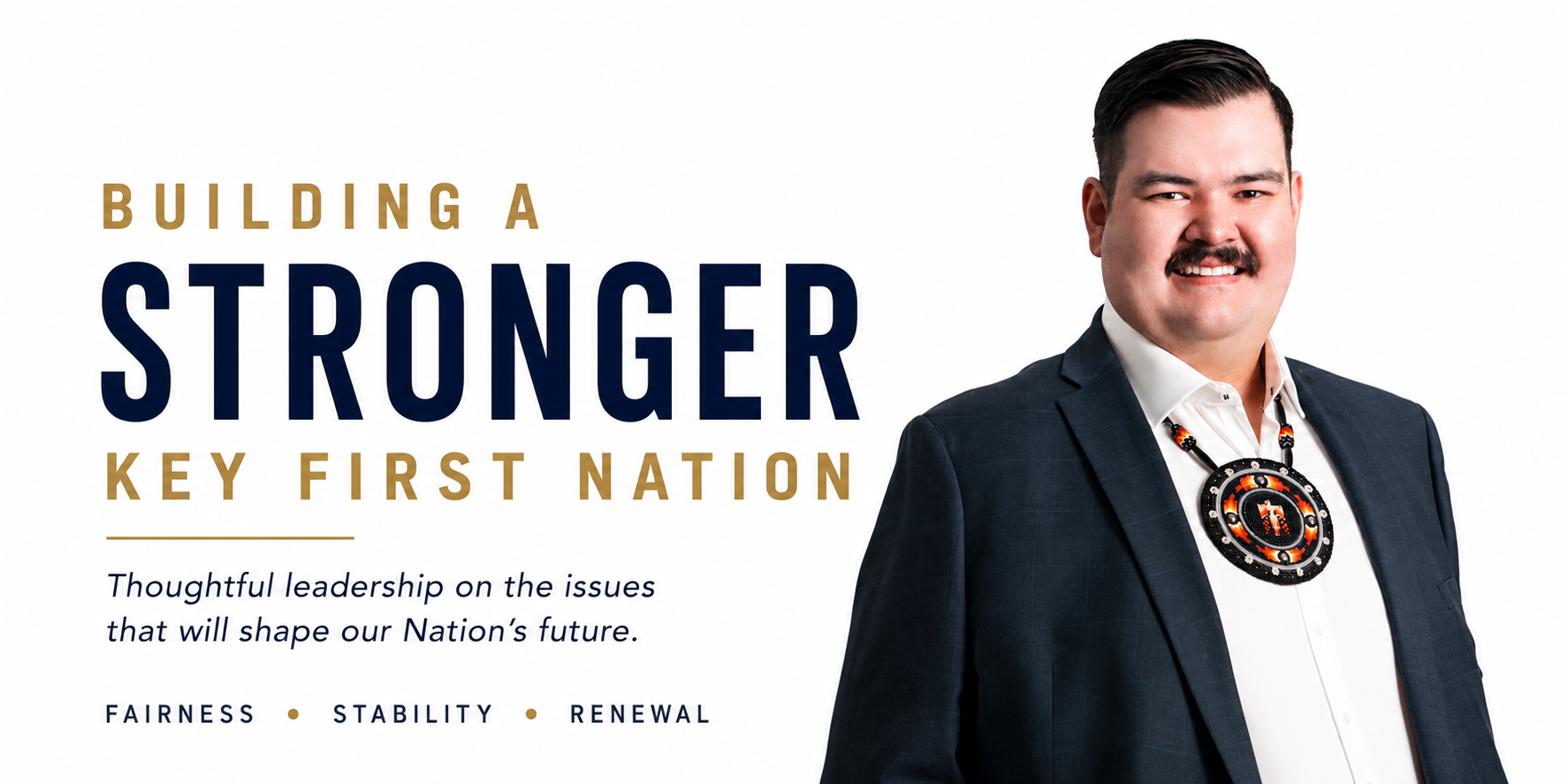
The Key First Nation deserves leadership that is thoughtful, practical, and focused on the real issues shaping our future.
These are some of the major issues I believe require serious attention, long-term planning, and steady leadership.
-
The Key First Nation’s future must be grounded in a clear defence of our Treaty rights, our jurisdiction, and our inherent right to govern ourselves.
Self-government is not achieved through slogans—it is built through serious legal, political, and institutional work.
That means strengthening our governance capacity, asserting our rights in practical ways, and ensuring our Nation is positioned to negotiate from a place of strength.
I believe leadership must be both principled and practical: protecting our rights while building the institutions needed to exercise them effectively.
-
Questions around membership, citizenship, and the second generation cut-off directly affect the future of our Nation.
Families want certainty. Members want fairness. Future generations deserve inclusion and thoughtful planning.
These are serious issues that require advocacy, legal clarity, and respectful Nation-level discussion.
I believe The Key First Nation should be actively engaged in these conversations and prepared to advocate where reform is needed to protect our people and our future.
-
Major negotiations—including land claims and long-term settlement discussions—require disciplined, experienced leadership.
These decisions can shape our Nation for generations.
It is not enough to reach settlements. We must also ensure we are prepared to manage outcomes responsibly, strategically, and in a way that creates lasting benefit.
That means strong negotiation, careful due diligence, clear governance structures, and a focus on intergenerational value—not short-term decision-making.
-
If significant settlement or trust resources come to our Nation, they must be managed with discipline, professionalism, and a long-term view.
I believe modern trust management should prioritize financial efficiency, sound governance, and structures that protect capital while creating sustainable benefit.
Done properly, strong financial stewardship can unlock greater returns, reduce unnecessary leakage, and create lasting opportunities for future generations.
This is about building wealth responsibly—not simply managing money.
-
A growing Nation requires modern infrastructure.
Housing shortages, transportation infrastructure, and aging community assets all directly affect quality of life.
We need serious long-term planning to meet our growing needs—including housing, roads, bridges, utilities, and community facilities.
I also believe The Key First Nation should work toward major new infrastructure investments, including a new health centre, a modern band office, and other facilities that reflect the needs of a growing Nation.
Infrastructure is not simply about buildings—it is about dignity, safety, and community well-being.Item description
-
Communities that build strong working relationships with governments often achieve more.
Relationships matter.
My experience working around government, negotiations, and institutional decision-making is a practical strength I bring to leadership.
That includes relationships and credibility with provincial, federal, and external decision-makers.
Good relationships do not replace protecting our interests—but they do help create access, opportunities, funding, and better outcomes.
The Key First Nation should be positioned as a Nation that is respected, engaged, and effective.
-
Strong Nations care for their people.
Community well-being includes access to health services, safe infrastructure, family supports, youth opportunity, and practical services members can rely on.
As our Nation grows, our community infrastructure and service capacity must grow with it.
This includes planning for improved health infrastructure, stronger community supports, and investments that improve day-to-day quality of life for members.